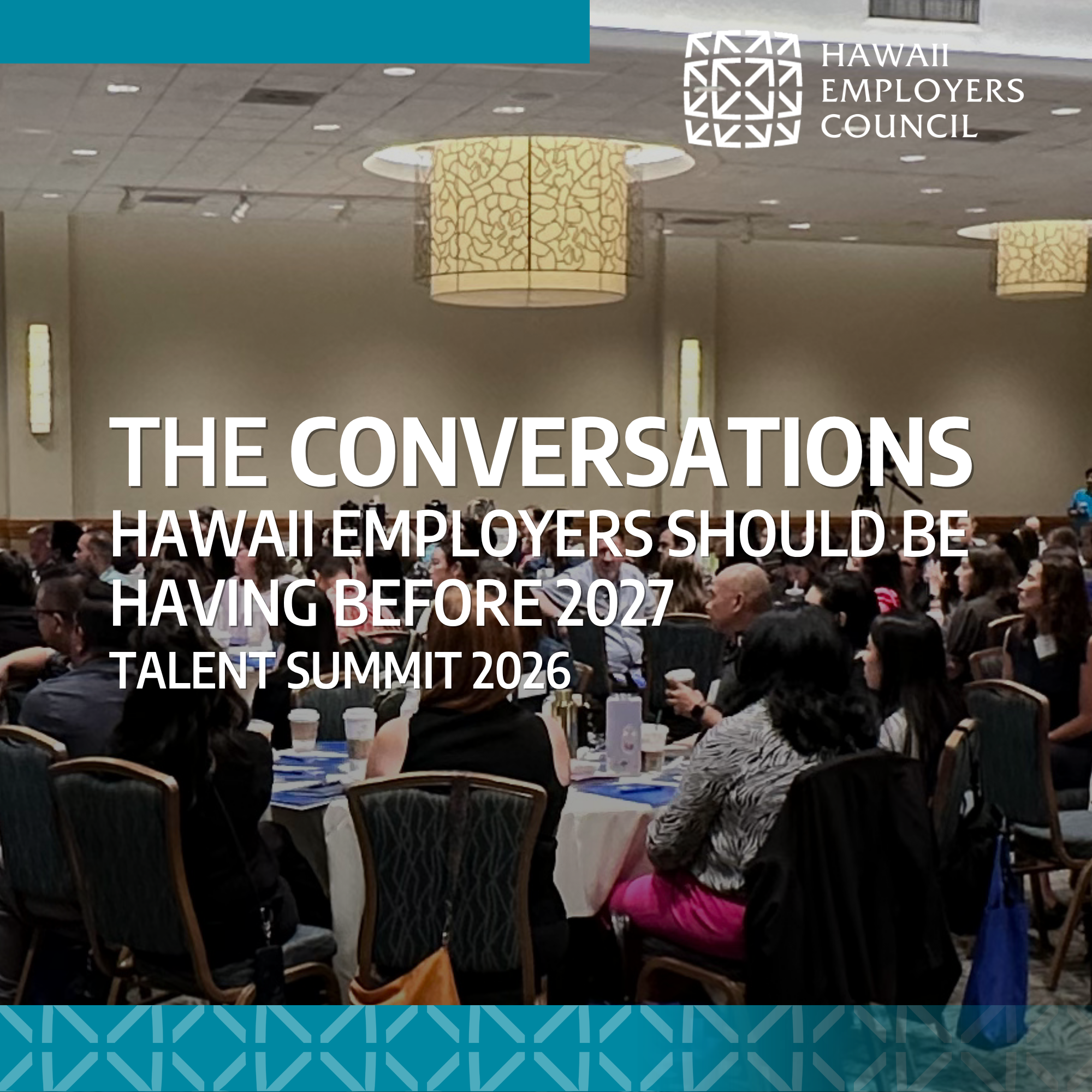
 The Conversations Hawaii Employers Should Be Having Before 2027
As 2026 enters its second half, Hawaii employers face a familiar challenge with new urgency: build, support, and keep the workforce they need while the ground continues to shift.
Some pressures are easy to identify. Costs remain high. Talent pools are tight. Employee expectations continue to change. Technology is moving quickly, and leaders are still working through what it means for jobs, teams, productivity, and trust. At the same time, many organizations are asking more of their people while trying to avoid burnout, turnover, and employee disengagement.
These challenges cannot be addressed by a single policy, program, or planning session. They require ongoing dialogue among leadership, HR, operations, finance, and frontline management. Before 2027, employers should prioritize practical discussions that respond to these pressures.
One is the capacity conversation. Many organizations are still expected to achieve more with the same or fewer resources. The focus should shift from “How do we get everything done?” to “What work matters most, who is best suited to do it, and what should we stop doing to help our people succeed?” This approach directly informs how employers prioritize limited capacity.
Another important discussion is about technology. Artificial intelligence and automation are already transforming work. However, adoption should not outpace trust. Employers must assess where technology can remove friction, where human decision-making must remain central, and how employees will be prepared to use new tools responsibly. This balance will shape the future of work.
A third discussion centers on leadership expectations. Managers are expected to coach, communicate, enforce standards, support flexibility, drive results, and care for team well-being. Organizations should clearly define what they expect from leaders and what support leaders need in return. These expectations influence how teams perform.
Employers should address talent development earlier and with greater intention. Hawaii’s future workforce will be shaped through internships, career pathways, mentorship, education partnerships, and internal growth opportunities. This process takes time and requires employers to look beyond immediate openings to long-term needs.
Finally, employers should discuss organizational culture. Employees want to know their work matters, expectations are fair, and the organization is committed to their growth. Strong cultures are built through consistent actions that demonstrate appreciation and accountability, not through slogans.
These conversations are not simple, but avoiding them will not make them easier. Hawaii employers have an opportunity to enter 2027 with greater clarity, stronger alignment, and a deeper understanding of their people and organizational needs. Together, these discussions offer a more intentional path forward.
HEC’s Talent Summit 2026 will continue many of these conversations on Friday, June 26, bringing together employers, HR professionals, business leaders, and workforce partners to share insights, learn from speakers, and connect with peers across Hawaii’s business community.